
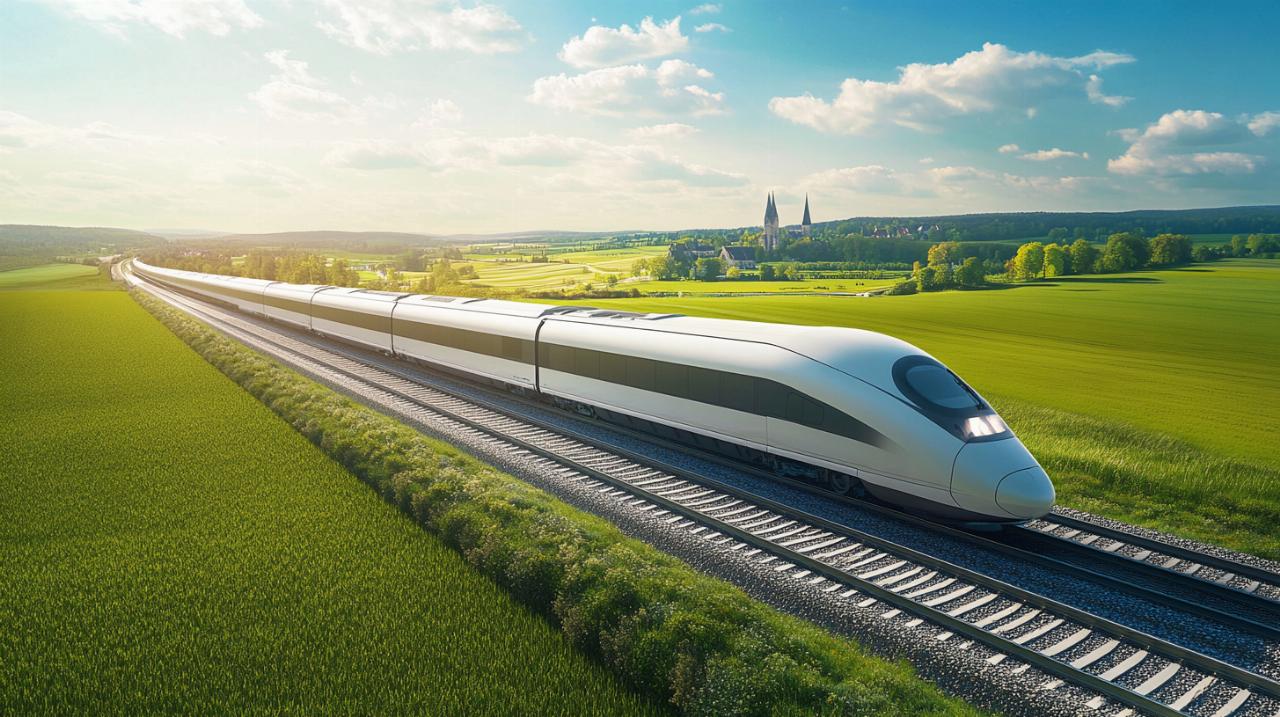





The landscape of European rail travel is experiencing a remarkable transformation, with new high-speed services connecting major cities in ways that were once reserved for air travel. One of the most eagerly anticipated developments in this expanding network is the introduction of direct train services linking Munich to Paris, a route that promises to redefine how passengers move between Germany and France. This evolution reflects a broader trend across the continent, where investment in railway infrastructure and a growing appetite for sustainable travel options are driving unprecedented demand for rail journeys.
Munich's gateway to france: the new high-speed rail revolution
Unveiling the Direct Services from Bavaria to the Heart of France
For decades, travelling from Munich to Paris required either a flight or a multi-stage rail journey with connections that could test even the most patient traveller. That is set to change dramatically by the end of 2026, when a new high-speed train route will launch between these two cultural powerhouses. The timing of this service is no coincidence, as it aligns with the completion of Stuttgart's ambitious station redevelopment project, known as Stuttgart 21, which will transform the city into a modern hub for European rail traffic. The impact of these improvements will be felt far beyond Stuttgart itself, with cities such as Augsburg and Ulm positioned to benefit significantly from enhanced connectivity to France.
Currently, passengers have just one TGV train each day in either direction between Paris and Munich, a service that offers a glimpse of what modern rail travel can achieve. The TGV already demonstrates impressive speed, covering the 400 kilometres between Strasbourg and Paris non-stop at velocities reaching 320 kilometres per hour, completing the journey in just one hour and 46 minutes. Once the expansion is complete, travellers will enjoy five fast direct connections between Paris and Munich daily, with a mix of French TGV and German ICE trains providing greater flexibility and convenience. Journey times from Augsburg to Paris will drop to around four hours and 40 minutes, down from the current five hours and 12 minutes, while passengers departing from Ulm will find themselves in the French capital in just three and a half hours, a notable improvement from the existing four hours and four minutes.
How Deutsche Bahn and SNCF Collaboration is Reshaping Cross-Border Travel
The success of this venture rests on the shoulders of a powerful partnership between Deutsche Bahn and SNCF, two of Europe's most prominent railway operators. Their collaboration on what has been dubbed the 'Main Line for Europe' represents a strategic commitment to making cross-border rail travel not just feasible, but genuinely competitive with air travel. The optimism surrounding the Paris-Munich route is fuelled in part by the remarkable performance of the recently launched Berlin-Paris ICE connection, which has achieved an average occupancy rate of 90 per cent, demonstrating a clear appetite among travellers for efficient rail alternatives. This success story has emboldened both operators to expand their international offerings, creating a network that will eventually allow passengers to travel from Paris to Vienna five times daily with just one change in Munich.
The Stuttgart 21 project is a cornerstone of this expansion, as its completion will enable more frequent and faster direct trains to Paris. One of the most striking improvements will be the journey time between Ulm and Stuttgart, which will plummet from nearly an hour to just 28 minutes by late 2026. This reduction is not merely a matter of convenience; it fundamentally alters the attractiveness of rail travel for both business and leisure passengers. Looking even further ahead, plans for a new line between Ulm and Augsburg are expected to shave an additional 15 minutes off travel times during the 2030s, cementing the competitiveness of this corridor. The collaborative spirit extends beyond Germany and France, with Austrian operator Westbahn having introduced a service in December 2024 that connects Stuttgart and Vienna with one change, further integrating the region into the broader European rail network.
Infrastructure Investment and the Trans-European Rail Network Expansion
The Rhine-Rhône Line and Billions in European Rail Funding
The impressive growth in rail services is underpinned by substantial financial commitments from both national governments and European institutions. The European Union has set ambitious targets to double high-speed rail usage by 2030 and triple it by 2050, goals that require not only political will but also vast sums of money. To that end, the EU has invested 5.4 billion euros into 135 transport projects, with an additional 7 billion euros allocated in grants to support the development of rail infrastructure across member states. These investments are crucial for projects like the Rhine-Rhône line and other corridors that form part of the Trans-European Transport Network, a system designed to create seamless connections across borders and reduce reliance on aviation for medium-distance travel.
France has been particularly proactive in expanding its high-speed rail network, with a new line from Paris to Bordeaux opening in 2017 and several other projects currently underway. Spain, meanwhile, boasts the second-largest high-speed rail network in the world after China, with nearly 2,500 miles of track enabling rapid movement across the country. In 2022, high-speed train passengers in Spain reached 23.7 million, representing a 76 per cent increase and underscoring the public's enthusiasm for this mode of transport. Other nations are following suit, with the Czech Republic planning six new high-speed lines starting in 2026, and Hungary and Serbia collaborating on a new route between Budapest and Belgrade. These projects collectively represent a fundamental shift in how Europe thinks about distance and connectivity, with trains reclaiming territory once dominated by airlines.
Ertms technology: modernising safety and efficiency across borders
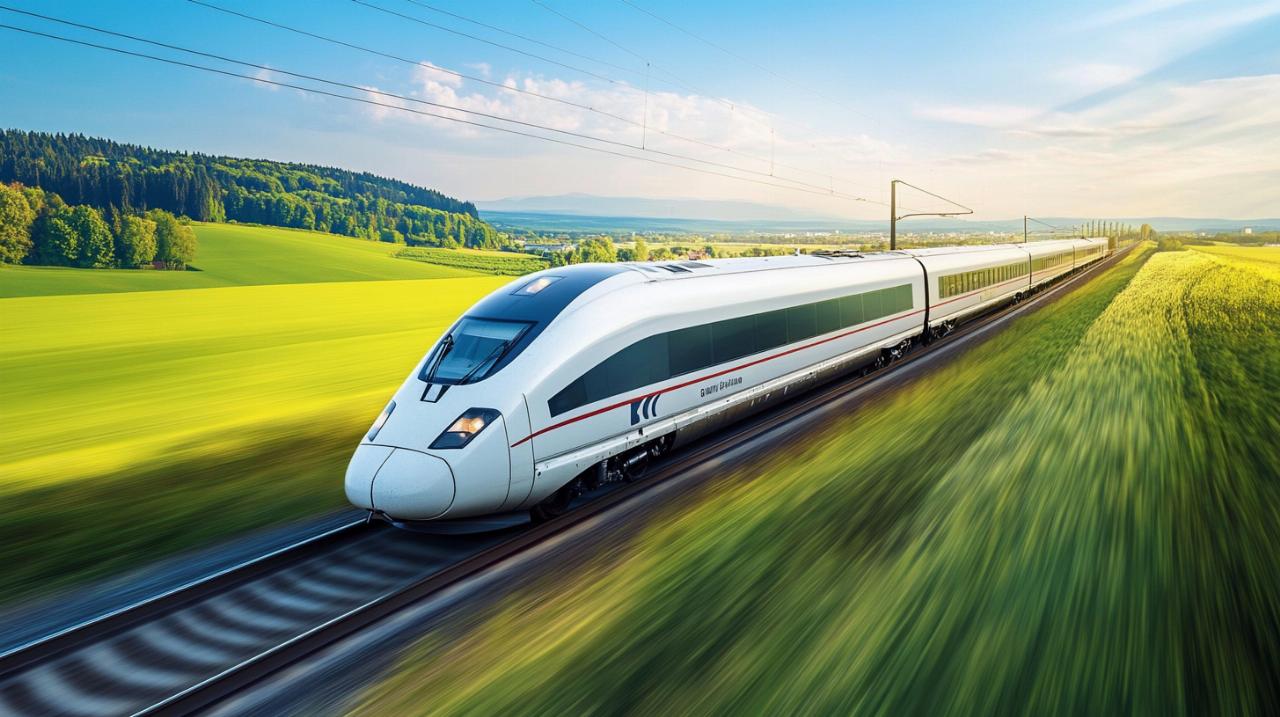
A key enabler of this expansion is the European Rail Traffic Management System, a sophisticated technology platform designed to standardise signalling and safety protocols across the continent. Before the implementation of ERTMS, each country operated its own signalling systems, creating inefficiencies and complicating cross-border operations. Trains had to slow down or even stop at borders while systems were switched, adding time and complexity to international journeys. With ERTMS, trains can move seamlessly from one nation to another, maintaining speed and reliability while adhering to uniform safety standards. This harmonisation is essential for the kind of integrated network that Deutsche Bahn, SNCF, and other operators are building, as it allows for more efficient scheduling and greater capacity on shared infrastructure.
The technology also facilitates better communication between trains and control centres, enabling real-time adjustments to timetables and reducing delays. For passengers, this translates into a more predictable and pleasant travel experience, with fewer disruptions and more reliable arrival times. Train companies have expressed a desire for longer advance notice when planning timetables, ideally a full year rather than the current four months, which would allow for better coordination and more stable service patterns. As ERTMS becomes the norm across Europe, the benefits will continue to compound, making rail travel an increasingly attractive option for those seeking speed, comfort, and environmental responsibility.
Passenger demand surge: why travellers are choosing rail over air
Comparing Journey Times and Convenience on High-Speed Routes
The shift from air to rail is driven by a combination of factors, with journey times playing a central role in passengers' decision-making processes. On routes like Paris to Munich, the total time spent travelling by train, when accounting for the ease of boarding and disembarking, often compares favourably to flying. Air travel requires passengers to arrive at airports well in advance, navigate security checks, and then make their way from often distant terminals into city centres at the other end. Trains, by contrast, depart from and arrive at stations located in the heart of cities, eliminating the need for lengthy transfers and reducing overall travel time. When the Paris-Munich route reaches its full potential with five daily services, the convenience factor will be even more pronounced, offering travellers the flexibility to choose departure times that suit their schedules without sacrificing speed.
The success of services like Eurostar further illustrates the appeal of rail travel. Eurostar has set a goal of carrying 30 million passengers annually by 2030, and recent data shows significant growth, with passenger numbers from London increasing by 38 per cent to Amsterdam, 33 per cent to Brussels, and 25 per cent to Paris in 2023. The company's ability to offer city-centre to city-centre connections in competitive timeframes has made it a preferred choice for both business and leisure travellers. Similarly, the popularity of routes like the Eurostar connection to Paris, followed by an afternoon TGV to Barcelona, demonstrates how seamless rail networks can open up new travel possibilities. Passengers can now leave London in the morning, change in Paris, and arrive in Barcelona by half past nine in the evening, a journey that would be far more cumbersome by air when factoring in airport processes and transfers.
The Environmental and Economic Appeal of Modern Train Travel
Beyond convenience and speed, the environmental credentials of rail travel are increasingly important to a generation of travellers conscious of their carbon footprint. Trains produce far fewer emissions per passenger kilometre than aeroplanes, making them a more sustainable choice for those seeking to reduce their environmental impact. France has recognised this by banning certain domestic flights on routes where the train journey is under two hours and 30 minutes, a policy that reflects a broader commitment to prioritising rail over air where practical. This regulatory shift, combined with growing public awareness of climate issues, has contributed to a surge in passenger rail traffic across the European Union, which increased by 50 per cent between 2021 and 2022.
The economic benefits of investing in rail are also becoming clearer, as improved connectivity can stimulate tourism and business activity in regions that might otherwise be overlooked. Sunvil, a travel company, reports that almost 10 per cent of holidays to Spain are now arranged around train travel, a figure that would have been unthinkable a decade ago. The availability of night train services, such as the European Sleeper route launched from Brussels to Berlin in 2023 and extended to Prague in March, adds another dimension to the appeal of rail, allowing passengers to travel overnight and wake up refreshed in a new destination. These services are not just about getting from point A to point B; they offer an experience that air travel simply cannot match, combining efficiency with the romance of train travel that has captivated passengers for generations.