


Off the southern coast of Brittany, where the Atlantic swells roll in from the open sea, Belle-Île-en-Mer stands as the largest of the Breton islands and the second largest in mainland France after Corsica. A short crossing from Quiberon brings travellers to a landscape of dramatic cliffs, sheltered coves and quiet villages, and the best way to take it all in remains, quite simply, on foot.
Key takeaways
- Belle-Île-en-Mer, the largest island in Brittany, offers diverse landscapes ranging from sheltered sandy bays to dramatic, windswept cliffs.
- The GR340 coastal path spans eighty-five kilometers, providing hikers with an immersive way to experience the island’s constantly shifting terrain.
- Historic landmarks like the Vauban citadel in Le Palais, the Goulphar lighthouse, and Sarah Bernhardt’s former home on the Pointe des Poulains highlight the island’s rich heritage.
- Charming villages such as the lively port of Sauzon and the peaceful rural village of Locmaria reflect the dual nature of island life.
- Visitors should plan carefully as wild camping is prohibited and metal-tipped hiking poles are banned on the coastal paths to protect the environment.
- Specific natural sites like the Grotte de l’Apothicairerie and the needle-like rock formations at Port-Coton are best appreciated by timing visits around low tide.
- The island’s varied scenery, which once inspired artists like Claude Monet, offers a unique coastal experience that rewards exploration on foot.
Why walking trails reveal the island’s most dramatic coastal scenery
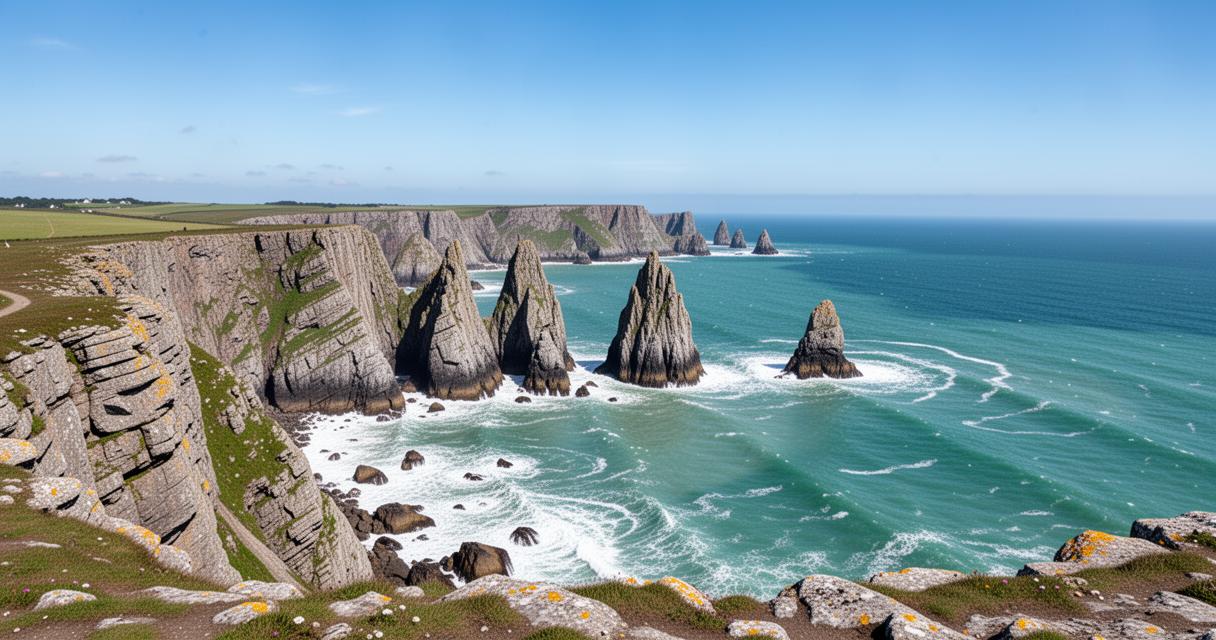
There’s something about pacing yourself along the cliffs of Belle-Île-en-Mer that no car journey could ever replicate. The island is laced with the GR340, a long-distance coastal path stretching across some eighty-five kilometres, and it’s here that walkers discover the true character of this stretch of Brittany. The terrain shifts constantly underfoot, from soft sandy tracks near the beaches to rocky outcrops battered by wind, and each bend in the path seems to reveal a fresh perspective on the sea.
Navigating the coastal path between wild beaches and rugged cliffs
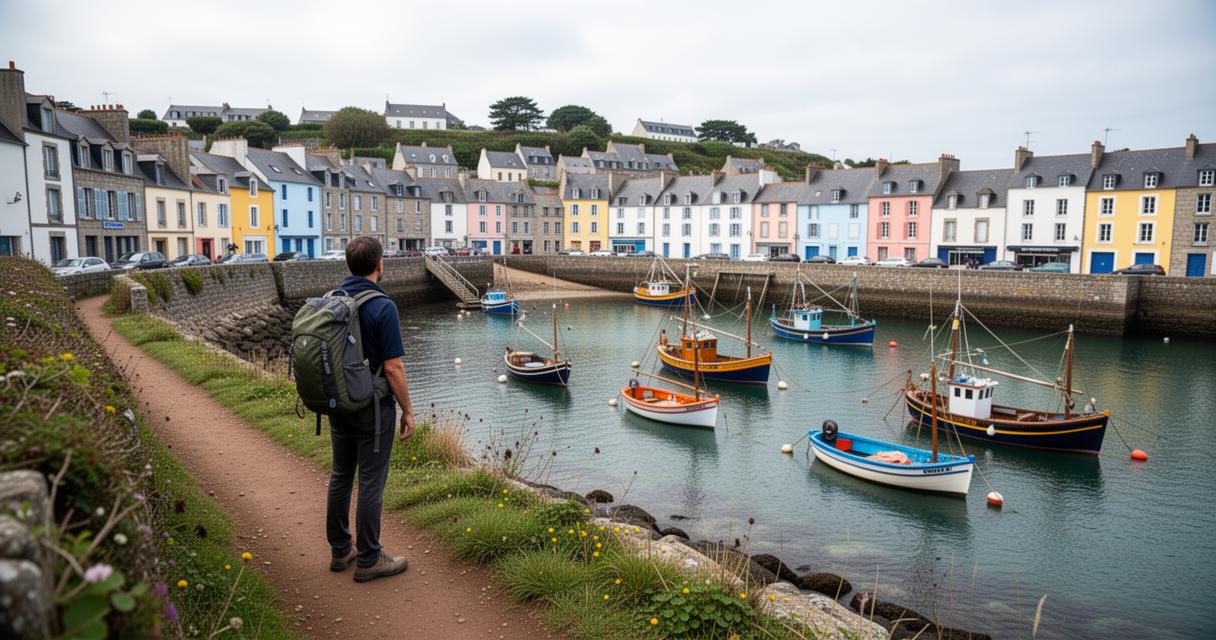
Walking the coastal path means alternating between tranquil bays and exposed headlands where the wind barely pauses for breath. Donnant beach is a highlight along the way, its generous stretch of sand backed by some of the tallest dunes in the region, and in springtime the dunes come alive with wildflowers found nowhere else. It’s worth noting that wild camping isn’t permitted anywhere on the island, so those tackling longer stretches need to plan overnight stops carefully. Walkers should also be aware that metal-tipped poles have been banned on the coastal paths since the summer of 2022, though sticks with rubber tips remain perfectly fine.
How the Brittany coastline transforms from sheltered bays to windswept headlands
What makes this part of the Brittany coastline so compelling is the sheer contrast within a single day’s walk. One moment you’re strolling past a calm, almost Mediterranean-looking inlet, and the next you’re facing cliffs carved by centuries of Atlantic swell. This variety is precisely why the island has become something of a paradise for hikers, drawing walkers who appreciate scenery that never settles into monotony.
Which historic landmarks deserve a place on your walking route
Beyond the natural drama, Belle-Île-en-Mer carries a weight of history that rewards those willing to pause and look closer. Fortifications, lighthouses and old fishing villages punctuate the walking routes, each telling a different chapter of island life.
Exploring maritime heritage from Vauban citadel to Goulphar lighthouse
In the old town of Le Palais, the main port, the Vauban citadel dominates the skyline and offers some genuinely delightful views back over the harbour. Inside its walls sits a museum devoted to the island’s art and history, a worthwhile stop before heading further along the coast. Further on, the Goulphar lighthouse rewards those who climb its many steps with a sweeping view that stretches across cliffs and open water alike, giving a real sense of scale to the island below. Nearby, Port-Coton is famous for its jagged, needle-like rock formations rising from the sea, a sight so striking it once captured the imagination of painters such as Monet, who returned to capture its light and texture time and again.
What Sauzon port and Locmaria village reveal about island life
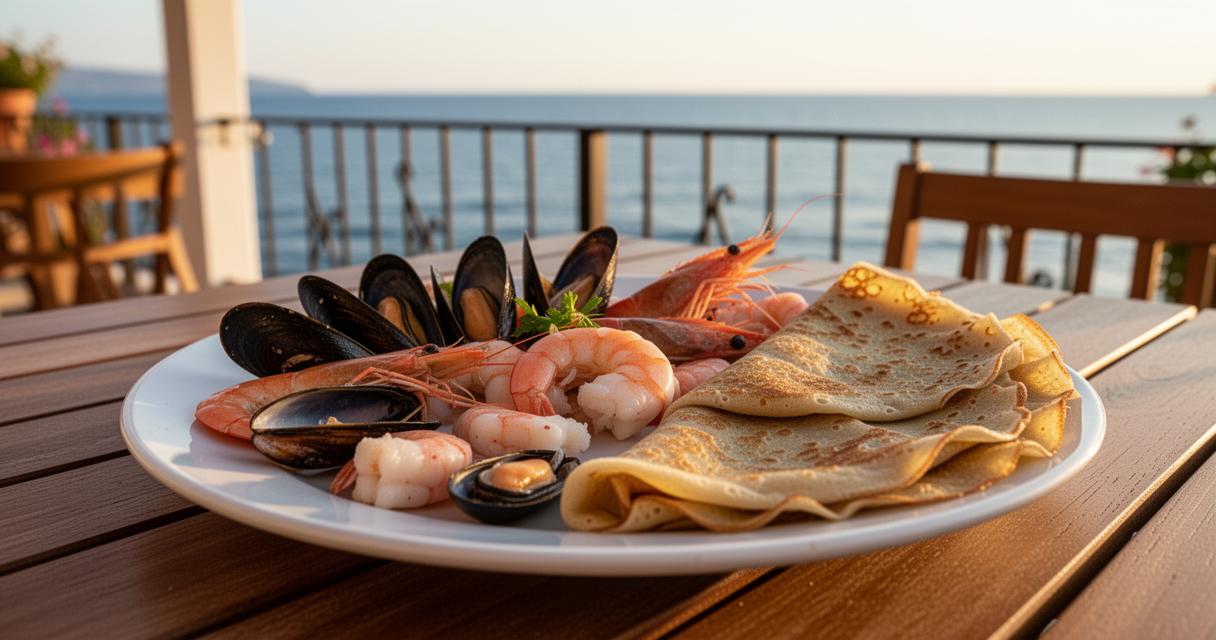
The port of Sauzon is often singled out as one of the prettiest spots on the island, its pastel-coloured houses lining the harbour and its cafes filling with locals and visitors alike as evening falls. A little further along, the quieter village of Locmaria offers a glimpse of a slower, more rural side of island life, away from the bustle of the main port. Together, these villages show two very different faces of the same island, one lively and maritime, the other calm and pastoral.
Where to find Belle-Île-en-Mer’s hidden natural wonders on foot
Some of the island’s finest moments are tucked away from the main routes, waiting to be found by those prepared to walk a little further or time their visit carefully around the tide.
Discovering secluded caves and needle rock formations at low tide
The Grotte de l’Apothicairerie is perhaps the most atmospheric of these hidden spots, a sea cave whose name recalls the rows of cormorant nests that once lined its walls like jars on an apothecary’s shelf. Timing a visit around low tide makes all the difference, revealing rock formations and hollows otherwise hidden beneath the waves. Along this same stretch, the island’s unique goose barnacle clings to the rocks, a curious reminder of just how wild and untouched this coastline remains.
Planning your route to catch sunset views from Poulains peninsula
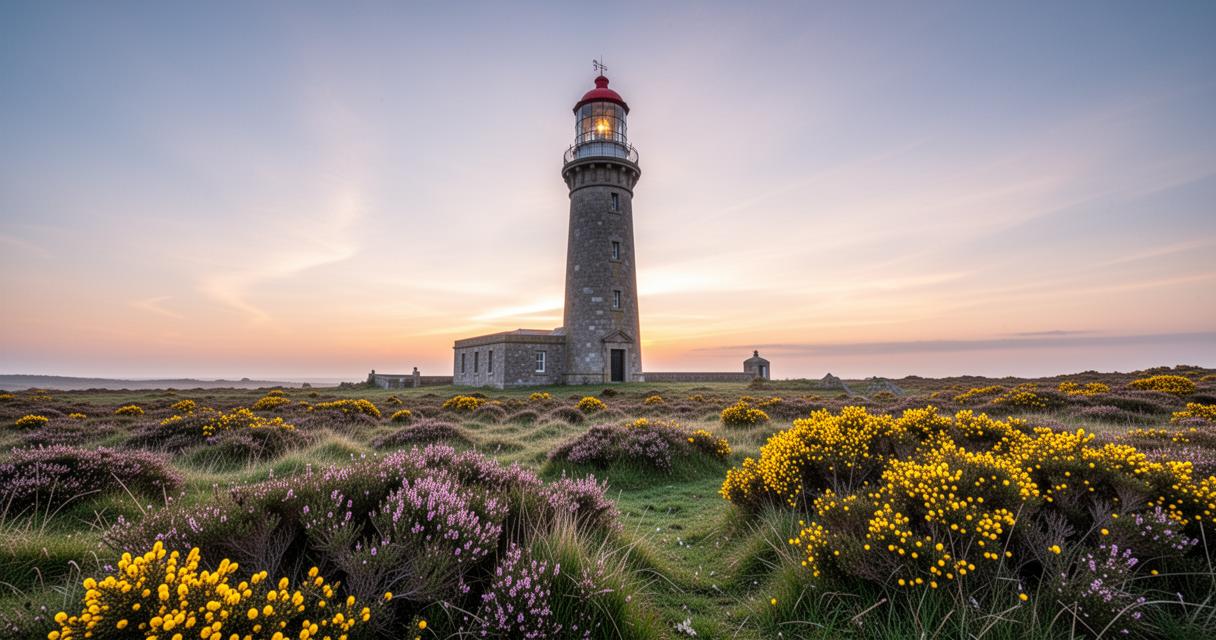
No walking itinerary on the island feels complete without a visit to the Pointe des Poulains, a windswept peninsula just a few kilometres from Sauzon. It’s here that the actress Sarah Bernhardt once made her home, and the house has been open to the public for visitors keen to learn more about her connection to the island. The peninsula’s lighthouse, standing since the nineteenth century, marks the island’s northern tip and makes for an especially memorable spot to watch the sunset, as the sky turns deep orange over the open Atlantic. For families looking for calmer waters, the beaches of Bordardoué and Grands-Sables offer a gentler alternative, best enjoyed outside the busiest summer weeks. Whether arriving by ferry from Quiberon or exploring independently with a guide, visitors tend to agree that the island’s paths, coves and headlands reward every step taken to reach them.